There is a version of success you know well.
A stable home. A locked door. A neighborhood you trust.
The quiet certainty that when the day ends, you are safe.
Now imagine living without that certainty—not for a night, but for years.
The Safety We Take for Granted
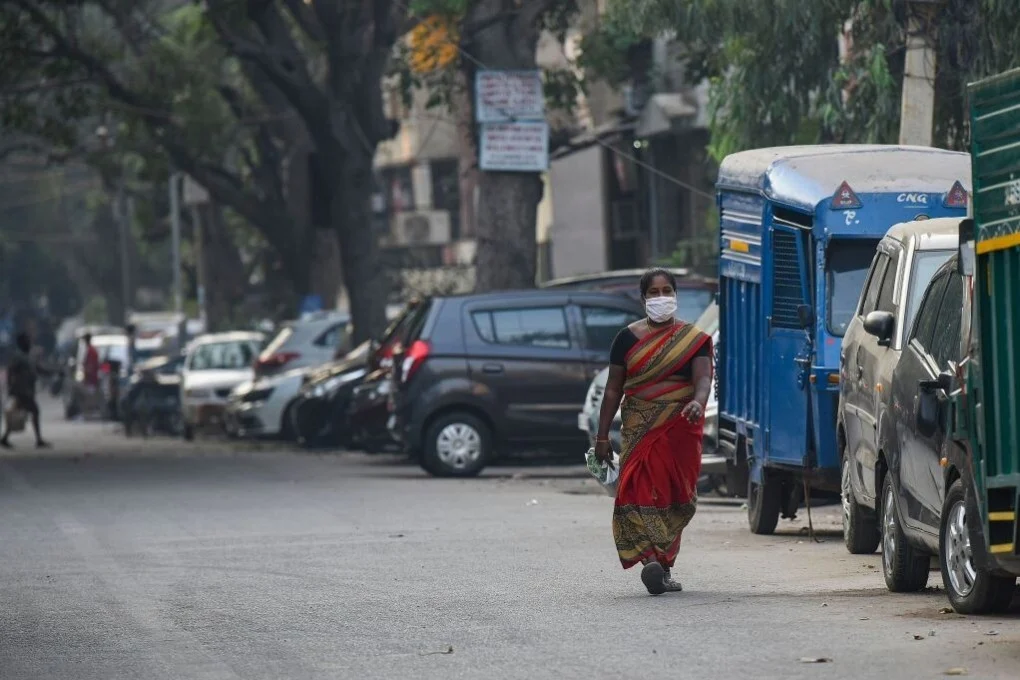
For millions of women in India’s informal workforce—domestic workers, factory helpers, street vendors—home is not a fixed place. It is temporary, uncertain, and often unsafe.
- According to various urban housing studies, over 35% of low-income urban households live in informal or unstable housing conditions.
- A significant portion of these are women-led or women-dependent households.
- Reports indicate that women in informal settlements face disproportionately higher risks of harassment, assault, and eviction-related violence.
But numbers only tell part of the story.
Because housing instability is not just about where someone lives.
It is about how exposed they are—every single day.
When “Home” Isn’t Safe
For a woman without stable housing, safety becomes situational.
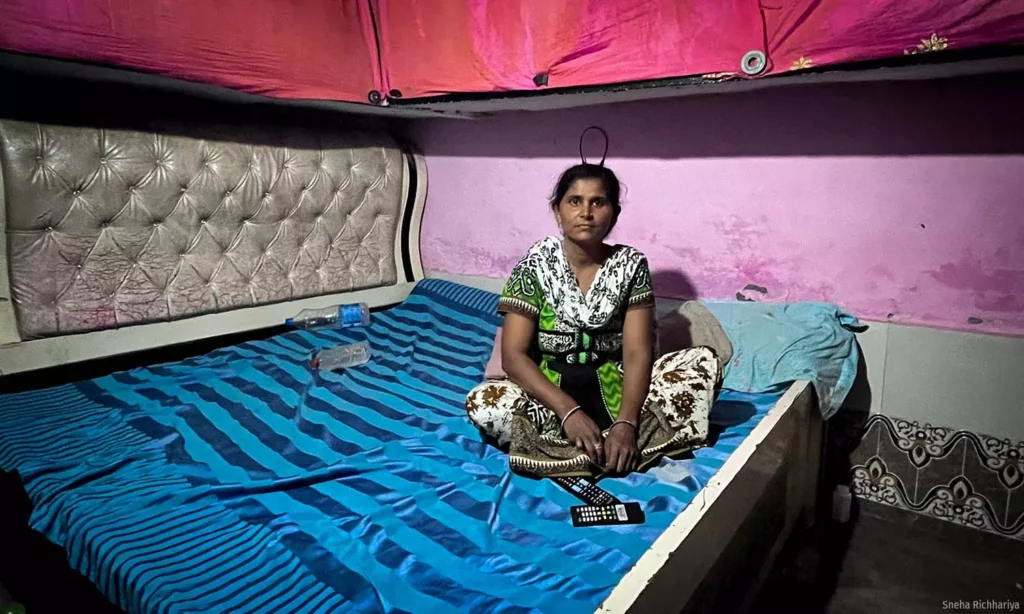
- A shared room with strangers
- A temporary shelter with no locks
- A landlord who can evict without notice
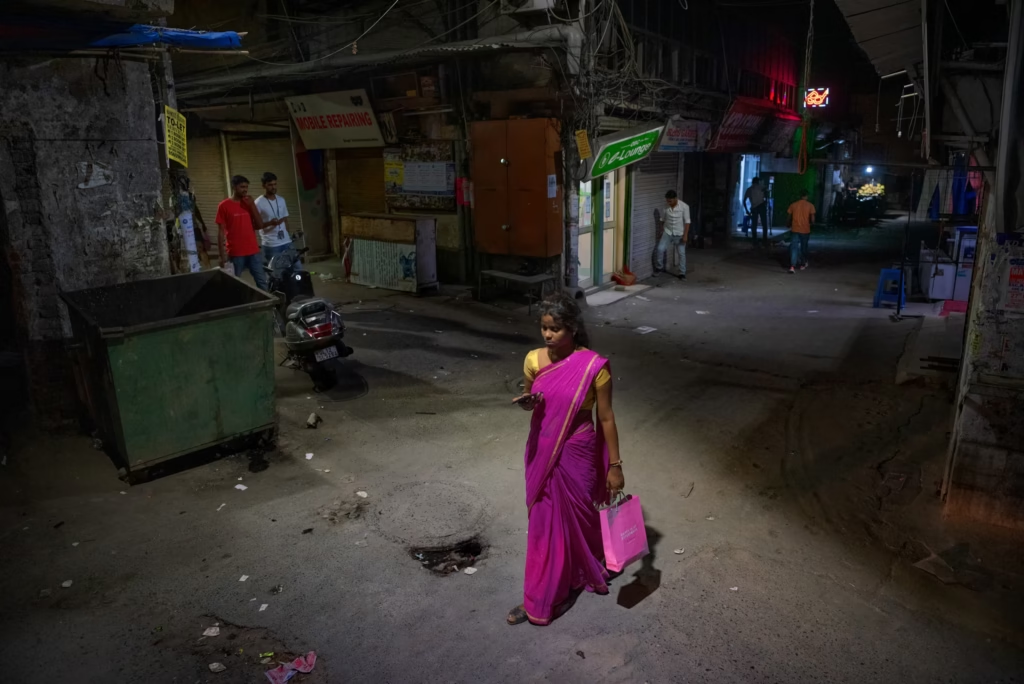
- A neighborhood where anonymity becomes vulnerability
Safety, in such environments, is fragile.
There is no guarantee of privacy.
No control over who enters the space.
No assurance of protection.
And most importantly—no power to say no.
The Hidden Link Between Housing and Violence
Research globally and in India consistently shows a pattern:
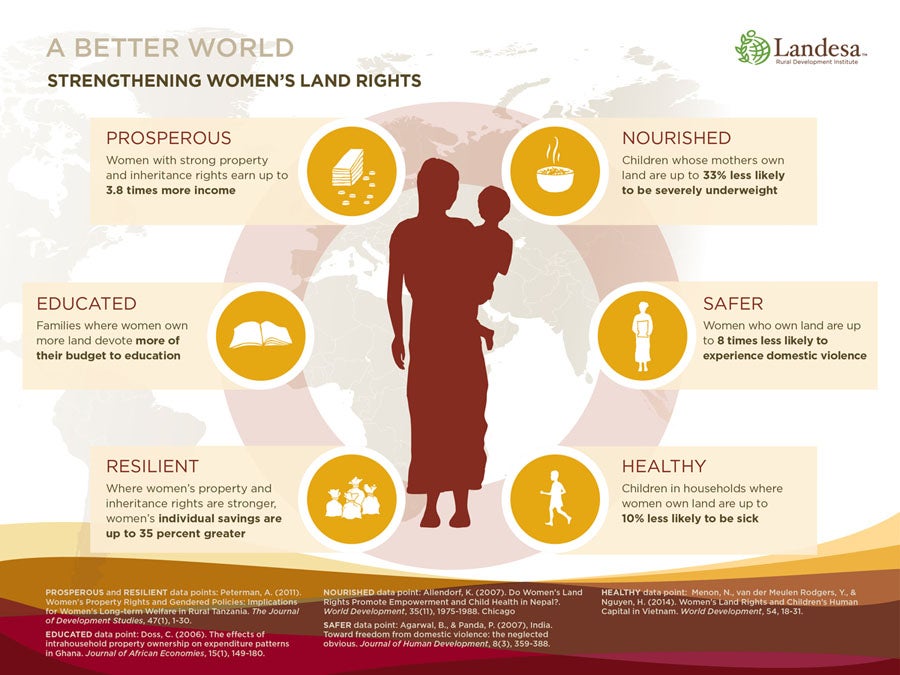
👉 Housing instability increases vulnerability to gender-based violence.
Why?
Because instability creates dependence.
- Dependence on landlords
- Dependence on employers
- Dependence on unsafe environments
When a woman does not control her living space, she often cannot control her boundaries.
A delayed rent payment can become a threat.
A complaint can lead to eviction.
A refusal can invite retaliation.
Safety is no longer a right—it becomes a negotiation.
The Psychological Toll
Beyond physical risk, there is a quieter, deeper impact.
Constant vigilance.
Women in unstable housing conditions often live in a state of hyper-awareness:
- Listening for footsteps at night
- Avoiding certain routes after work
- Sleeping lightly, never fully at rest
This chronic stress affects:
- Mental health
- Work productivity
- Decision-making ability
It is difficult to build a future when your present feels uncertain.
The Impact on Families
When a woman’s home is unstable, the ripple effects are generational.
- Children grow up in environments lacking safety and continuity
- Education gets disrupted due to frequent relocations
- Exposure to unsafe surroundings becomes normalized
A home is not just shelter.
It is the foundation of dignity, stability, and growth.
Without it, everything else becomes fragile.
A Contrast Worth Reflecting On
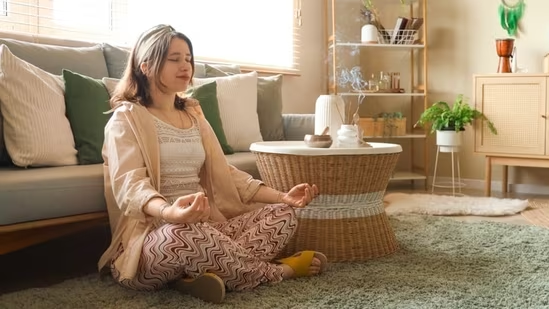
Pause for a moment.
Think about your own home.
The door you lock at night.
The space where you feel fully yourself.
The environment where your ambitions grow uninterrupted.
Now consider this:
👉 What if that foundation did not exist?
Would your career look the same?
Would your confidence feel the same?
Would your sense of safety be intact?
For many women, the answer is no.
Why This Matters to You
This is not just a social issue.
It is a structural gap in empowerment.
We often speak about:
- Financial independence
- Career growth
- Leadership
But without safe housing, these are incomplete.
Because true empowerment begins with security.
And security begins with a home.
The Power of Collective Action
The scale of this problem is large—but not insurmountable.
What’s missing is not awareness.
It is organized, purposeful action led by those who can influence change.
When accomplished women come together—not just to donate, but to enable ownership and stability—something shifts.
- Dependency reduces
- Vulnerability decreases
- Dignity is restored
A home does more than provide shelter.
It redefines a woman’s relationship with the world.
A Quiet Question
There are many ways to measure success.
But perhaps one of the most meaningful is this:
👉 How many lives became safer because you chose to act?
Because somewhere in this city, tonight,
a woman will sleep lightly—
not because she wants to,
but because she has to.
And the difference between fear and safety
may simply be a door she can call her own.

Closing Thought
Housing instability is not just about poverty.
It is about exposure, vulnerability, and risk.
And solving it is not just charity.
It is restoring safety where it has long been absent.
The question is no longer whether this problem exists.
The question is—
who will step forward to change it?